

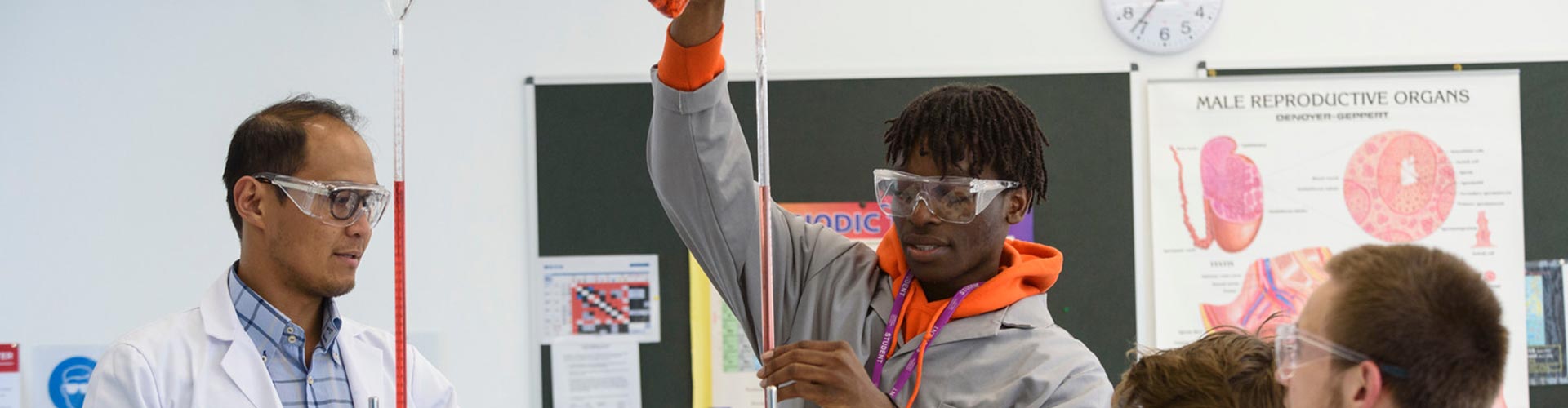
The Laboratory Sciences T Level is a two year Level 3 qualification designed for learners who want to develop the scientific knowledge and technical skills needed for a career in laboratory environments. The programme is equivalent to three A Levels and is recognised by universities and employers across the UK. Students complete a high quality industry placement lasting around nine weeks with laboratories based in local universities, NHS settings, or scientific businesses. This qualification covers the core scientific principles that apply across biology, chemistry, and physics, alongside an occupational specialism in laboratory sciences.
- Entry Requirements, Units, Assessment and more...
Entry Requirements
Learners need five GCSEs at grade 5 or above, including English, Maths, and Science. These academic requirements ensure that students can confidently access the scientific and technical content of the course.
Assessment Method
Assessment combines internal and external components over two years. Throughout the course, teachers assess learners to help identify strengths and areas for development. In Year 1, students complete an Employer Set Project in May and sit written examinations in June. In Year 2, they undertake a substantial 25 hour synoptic assessment running from March to June, designed to test their applied scientific knowledge and laboratory skills.
Aims of the course
The course aims to develop the broad scientific understanding and technical proficiency required to become a laboratory technician. It equips learners with the knowledge, practical ability, and professional behaviours needed to succeed in a wide range of scientific roles.
Progression Opportunities
On completion, learners can progress to science related degrees, higher level apprenticeships, or employment in laboratory settings. The qualification provides a strong foundation for careers in research, diagnostics, quality control, or wider scientific industries.
Facilities
Learning takes place in both classrooms and specialist laboratories using industry standard equipment and technology. Learners also undertake independent study and gain hands on experience through off site work placements, enabling them to apply their learning in professional settings.
Career Options
This T Level is ideal for learners aspiring to work in scientific environments. Graduates commonly progress into roles such as Laboratory Technician or Laboratory Assistant or move into higher education to study subjects including biomedical science, chemistry, biology, or other science based disciplines.